
How to Choose Decorative Ceramic Vases for Hotels and Hospitality Spaces
Choose decorative ceramic vases for hotel lobbies, guest rooms and hospitality spaces. Explore form, glaze and project planning.
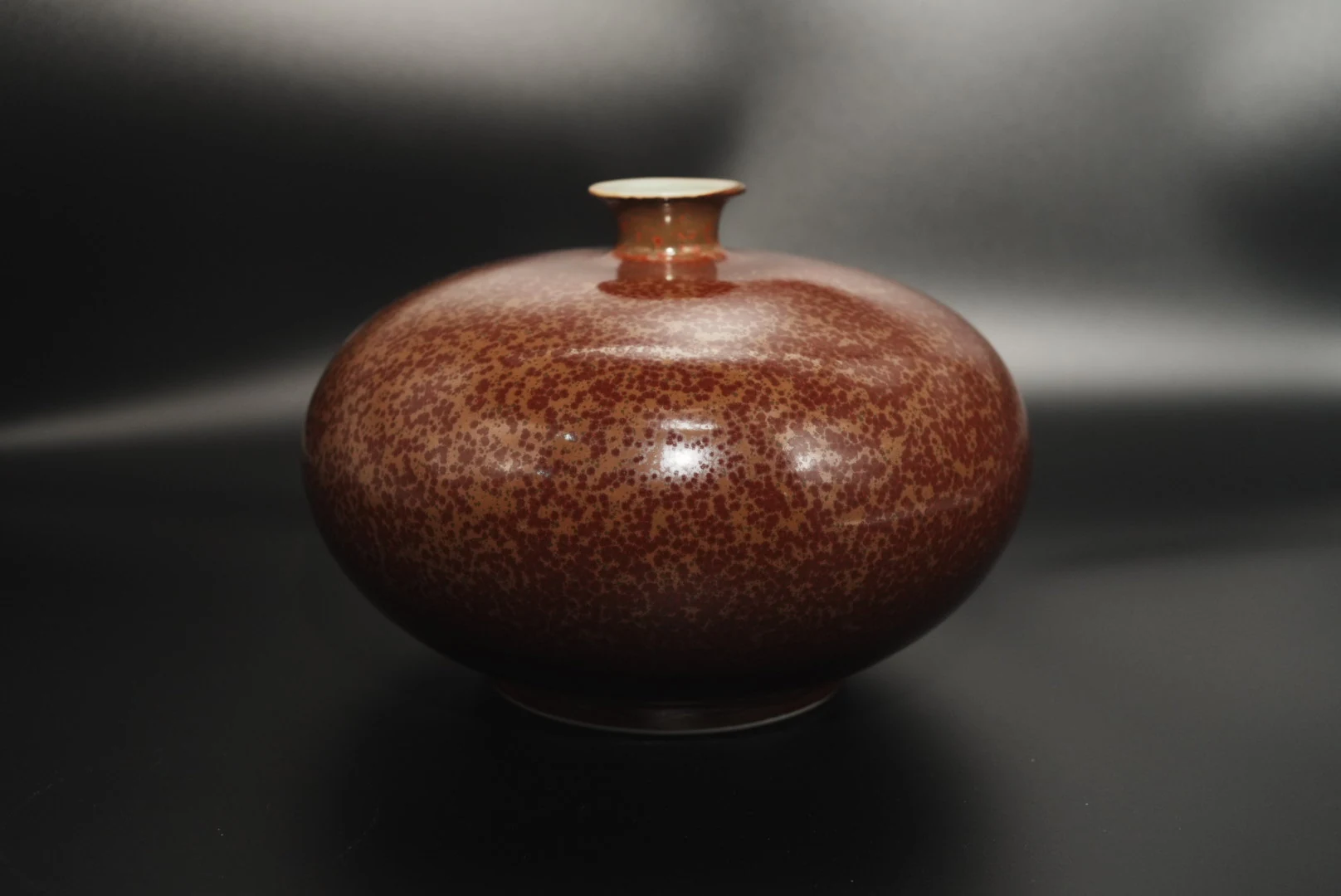
At a glance: Use room photos and surface measurements to shortlist forms. View a sample on the actual console or shelf to judge its glaze. For a custom colour, send the vase style, a colour reference and the intended placement together.
A lobby vase can draw the eye from a distance, while a guest-room console still needs space for personal items. Our decorative vases use form and glaze as the focus of the display.
This guide is for hotel buyers and designers. First, choose where the vase will sit. Then use a sample to check its shape, glaze and scale. Tell us the name or code of a piece you like to start a conversation.
Start with the space
- 01 · PlacementLobby, guest room or lounge
- 02 · Form and scaleConsider the surface and viewing distance
- 03 · Glaze and lightCoordinate with materials and lighting
- 04 · Project detailsSamples, quantities and delivery
Begin with the guest's view
In its Canopy Sioux Falls hotel, Hilton describes combining industrial and natural influences with local art. A purchasing team can agree placement and viewing angles with the designer, then compare samples alongside the furniture and materials.
Lobby and reception
Guests see a lobby from near and far. A clear shape can be seen from the door. At the desk, the glaze and fine details come into view. A round vase can give a console a focal point. A small group can bring rhythm to a long shelf. Leave space around each piece so its shape is clear.
Measure the width and depth of the console or shelf. Allow room around the vase. A photo alone cannot show whether it will fit. Check that the piece sits securely and leaves staff room to clean.
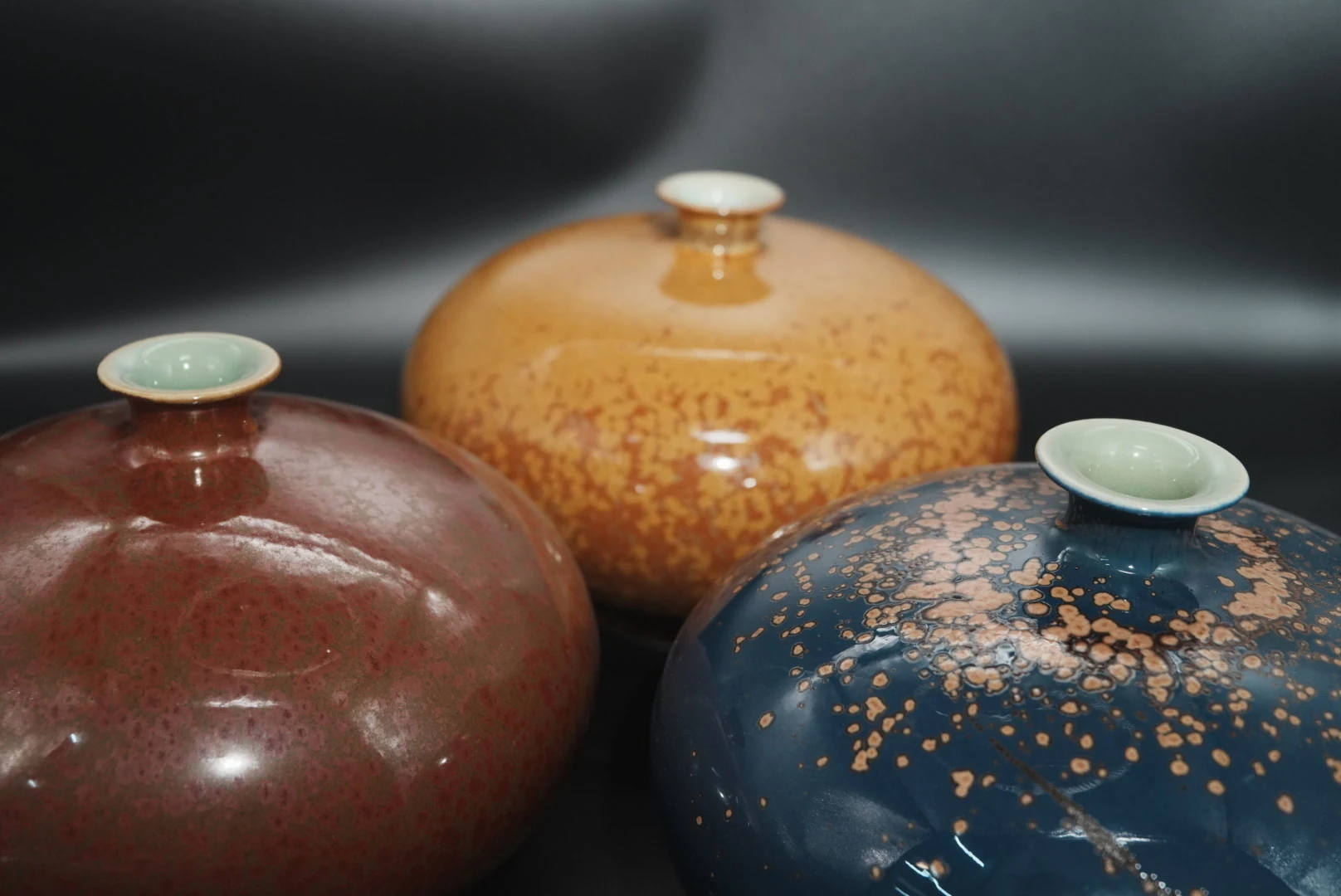 Three glaze directions photographed together: rich red, ochre and deep blue.
Guest rooms, lounges and dining areas
In a guest room, leave space for the guest’s things. A lounge shelf can hold a quiet group of pieces. In a dining room, check the view across the table. Leave room for staff to clear and clean it.
A hotel can use one colour in more than one shape. It can also pair related glazes with different forms. This links the spaces while giving each its own feel.
Choose a silhouette for the setting
Match the form to the setting
Hotel spaces
- Lobby and receptionA clear silhouette at different distances
- Guest rooms and loungesLeave usable space on the surface
- Dining spacesConsider sight lines and daily service
A round form feels calm and grounded. A taller, narrow piece can add height to a shelf. A low, broad form can be seen from above. Check the height, width and base against the furniture before choosing.
One vase can give the eye a place to rest. A group can use height and shape to create rhythm. Start with two or three samples. Move them on the actual shelf and see how they look next to the furniture and art.
Build a shortlist around the surface
Take a photo of the console and measure its width and depth. Look at it from the door and from each side. Compare one vase with a small group in a related colour. Ask for the size of each piece on your list.
For example, try a round vase on the front desk and a smaller form on a lounge shelf. A sample lets the team check how they work in the space.
Let glaze and light work together
Glaze can link a vase to wood, stone, cloth or metal. Deep blue and red can act as accents. Earth tones can sit quietly in a calm room. A speckled glaze invites a close look; a clear colour reads well from farther away.
Review glaze colour on an actual sample. Ceramic Arts Network’s guide to glaze discrepancies explains that application and firing conditions can affect colour and surface. Record the approved sample, principal tones and any agreed range of variation for your project.
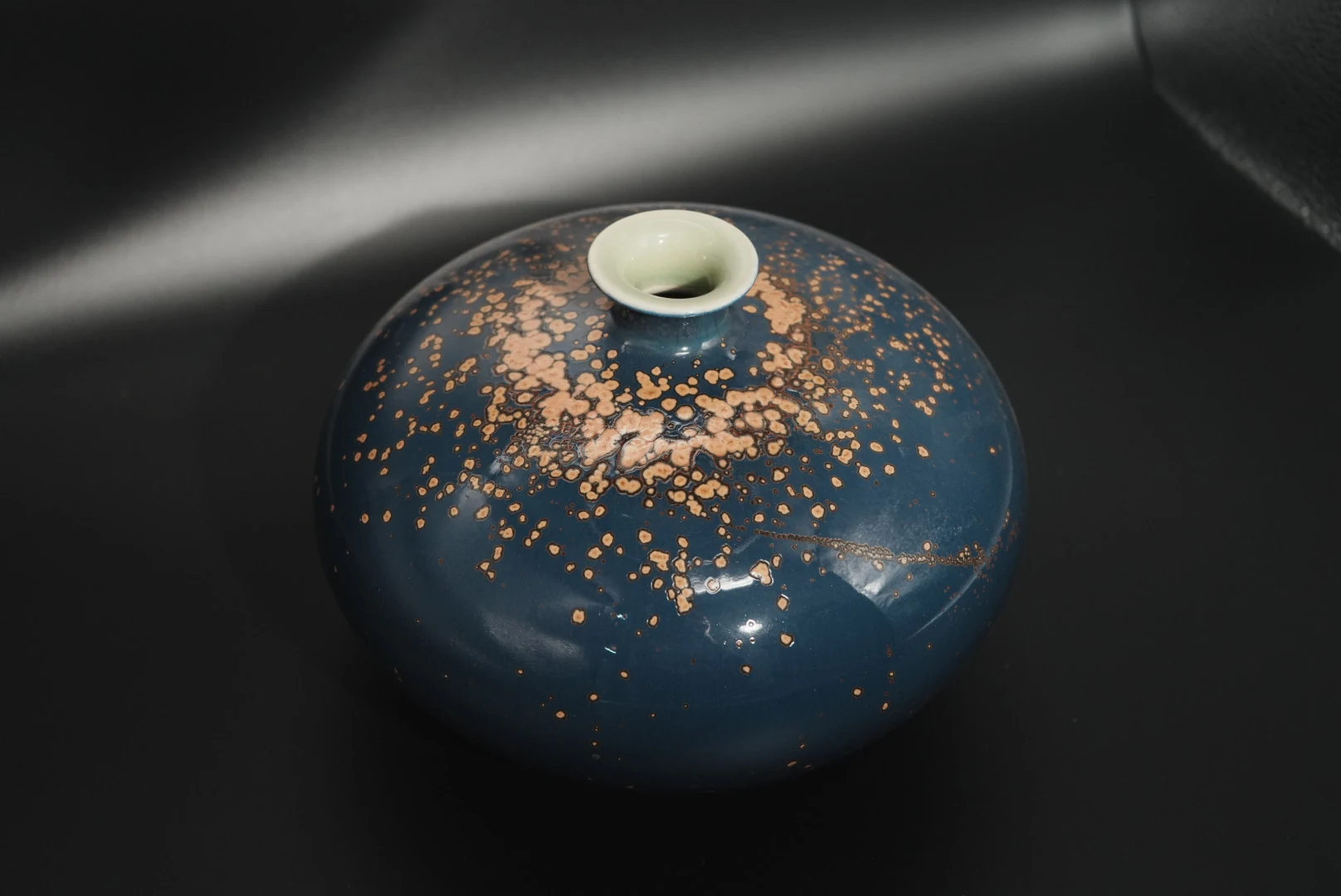 Deep blue glaze and warm speckled details viewed at close range.
View each sample in the hotel’s own light. Daylight and warm lamps can make a surface look different. Our vase glaze colours can be customised. Share a form, colour reference and room photo with us. We will discuss the options and sample arrangements for your project.
Read a glaze reference together
A ceramic glaze is a glass-like coating formed on a ceramic surface during firing. The Smithsonian National Museum of Asian Art explains how ingredients and firing conditions contribute to its colour. For a decorative vase, look at the overall tone first, then check the pattern and reflections at the distance guests will normally view it.
When presenting a colour brief, send a room photograph and a preferred reference alongside the vase code. Discuss whether the team wants a quiet overall match or a visible accent. Keep the approved sample and the agreed range of variation available for everyone involved in the project.
Plan a consistent project without losing character
A hotel project, step by step
- Define the spacesShare areas, measurements and style
- Share your directionSend product codes or colour references
- Discuss samplesCompare glaze, scale and lighting
- Confirm arrangementsDiscuss quantity, packaging and delivery
A hotel group may need a shared look across several spaces. Start with a list of rooms, shelf sizes, rough quantities and the dates you need them. Share room photos or a materials board if you have them. We can discuss pieces and glaze directions that may fit.
A sample lets the team check colour, scale and surface in the room. For use across sites, agree on a sample and the range of glaze variation before the order. Ceramic surfaces can vary. The range should be agreed for the piece and project.
| Project need | What to check |
|---|---|
| Reception focal point | View from the entrance and desk; furniture dimensions; safe placement. |
| Guest-room programme | Space available, visual consistency and ease of daily cleaning. |
| Lounge or dining area | Sight lines, surrounding materials and the amount of space on the surface. |
| Coordinated interiors | Glaze references, sample review, quantity and delivery destination. |
What to share when you enquire
Send the name or code of a vase you like, or a photo that shows the colour and mood you want. Tell us where the pieces will go and where they need to be sent. A rough quantity and date are helpful if known. We can discuss the rest together.
For each site, note the delivery address, quantity and target date. Ask how each vase will be wrapped and cushioned. The Ceramics Field Guide shows general packing methods. Agree on packing and damage handling for the order. FedEx also recommends considering the item, package and shipping service together.
We are based in Yixing, Jiangsu and select ceramic objects for retail, interiors and gifting. If you are still exploring, we can recommend more pieces from our collection. Browse our vases or discuss your project.
Sourcing decorative vases for a hotel or interior?
Share a piece, room reference or glaze direction you like. We can discuss the needs of your project.
Discuss your hotel vase projectFrequently asked questions
Can the vase be displayed on its own?
Yes. Our decorative vases are selected as objects to be enjoyed for their form and surface. Discuss the intended placement with us when choosing a piece.
Can a hotel project request a custom glaze colour?
Yes. Share the form and colour direction you have in mind. Available options, sample arrangements and the finished appearance are confirmed for the specific project.
Do I need a final quantity to make an enquiry?
No. A preferred design and a brief description of the project are a useful starting point. Quantity, pricing and delivery can be discussed with us afterwards.
About this article
AM Clay Studio wrote this guide using photographs of its decorative vases. The hotel case illustrates interior design choices, while the glaze and packing references help inform project discussions. For an enquiry, share the placement, available surface dimensions and a glaze reference.
Further reading
- Hilton: Canopy Sioux Falls design example
See how local materials and art informed a hotel interior. - Smithsonian National Museum of Asian Art: Glaze
Learn what a glaze is and how composition and firing affect its colour. - Field Guide for Ceramic Artisans: Packing Fragile Materials
Review individual wrapping, cushioning and outer-box protection. - Ceramics for retail, hospitality and gifting
Build a shortlist and prepare glaze references for a project.