
Discovering Yixing Zisha: Material, Form and Everyday Tea
A clear guide to Yixing zisha, with two collection examples, real cup photos and a checklist for choosing pieces for tea, retail and gifts.
Zisha is a pottery tradition from Yixing in Jiangsu, China. It is best known for teapots and tea wares. Many historic pieces have no glaze: the fired clay forms the surface you see. The University of Michigan Museum of Art’s tea pot record describes one such piece as unglazed stoneware.
To choose a piece, start with its material records. Then look at the shape, the cups it will serve and the space where it will be used. This guide combines museum sources with examples from our collection. It is for tea drinkers, shop buyers and those choosing gifts.
Key takeaways
- Start with documentation: colour, photographs or a seal alone cannot establish the clay or making method.
- Consider use: assess grip, pouring and the relationship between pot and cup capacity in the intended setting.
- Confirm the practical details: included pieces, care guidance, packaging and supply arrangements.
What is Yixing zisha? Material and surface
Zisha does not mean that every piece is purple. You may also see the terms Yixing ware and zisha teapot. Yixing ware is a broad name, not proof of one clay recipe. The Philadelphia Museum of Art describes fine-grained stoneware with warm earth tones and a slight sheen, even without glaze.
Museum records offer context for historic pieces, while a current product needs its own material and making information. Ask for those details when comparing pieces for your collection; colour alone is not a reliable guide to composition.
For display, look at how colour, texture and shape work together. A quiet, round form may suit a simple tea shelf. A bold shape or a carved detail may draw the eye. Choose the role you want the piece to play.
How to assess form: proportions and a sample
When choosing a teapot, start with the body, spout and handle. Some historic pots draw on plants and fruit. This UMMA tea pot has a body shaped like a pomegranate and a spout based on a lotus shoot. It is one example of how a maker can link shape and detail.
Place the pot beside the cups and tray you have in mind, and consider how their proportions work together. Check the space around the handle and the balance of the overall group. Photographs offer a useful starting point; a sample lets you explore the handling in person.
Then try the actions the pot is meant for: fill, lift and pour. Check the grip, lid and balance together. A front view cannot show how a pot feels when full. Follow the supplier’s use and care guidance when checking a sample.
Two collection examples: what the form tells you
Two pieces from our collection offer different ways to build a tea setting: a quiet outline or a shared decorative theme. Look at the details, then decide what you would like to check with a sample.
Quiet Lotus (XT10)
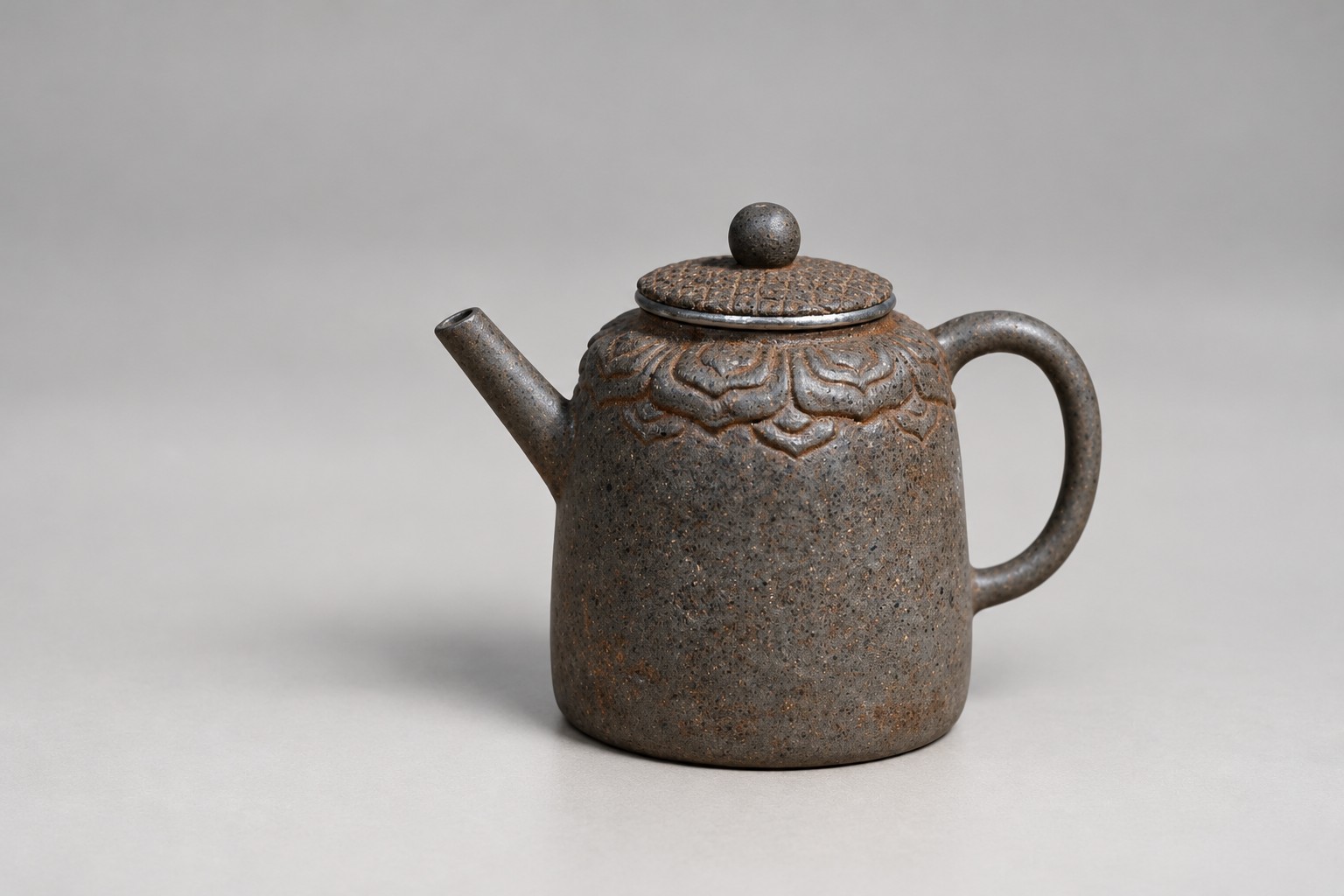
Quiet Lotus (XT10) has a straight-sided body, an angled spout and petal-like details near the top. Use it to compare the outline of a pot with its smaller details. For a quiet display, try plain cups and a simple tray beside it. Ask for a sample to check the grip, lid and pour.
Drifting Fish (XT05)
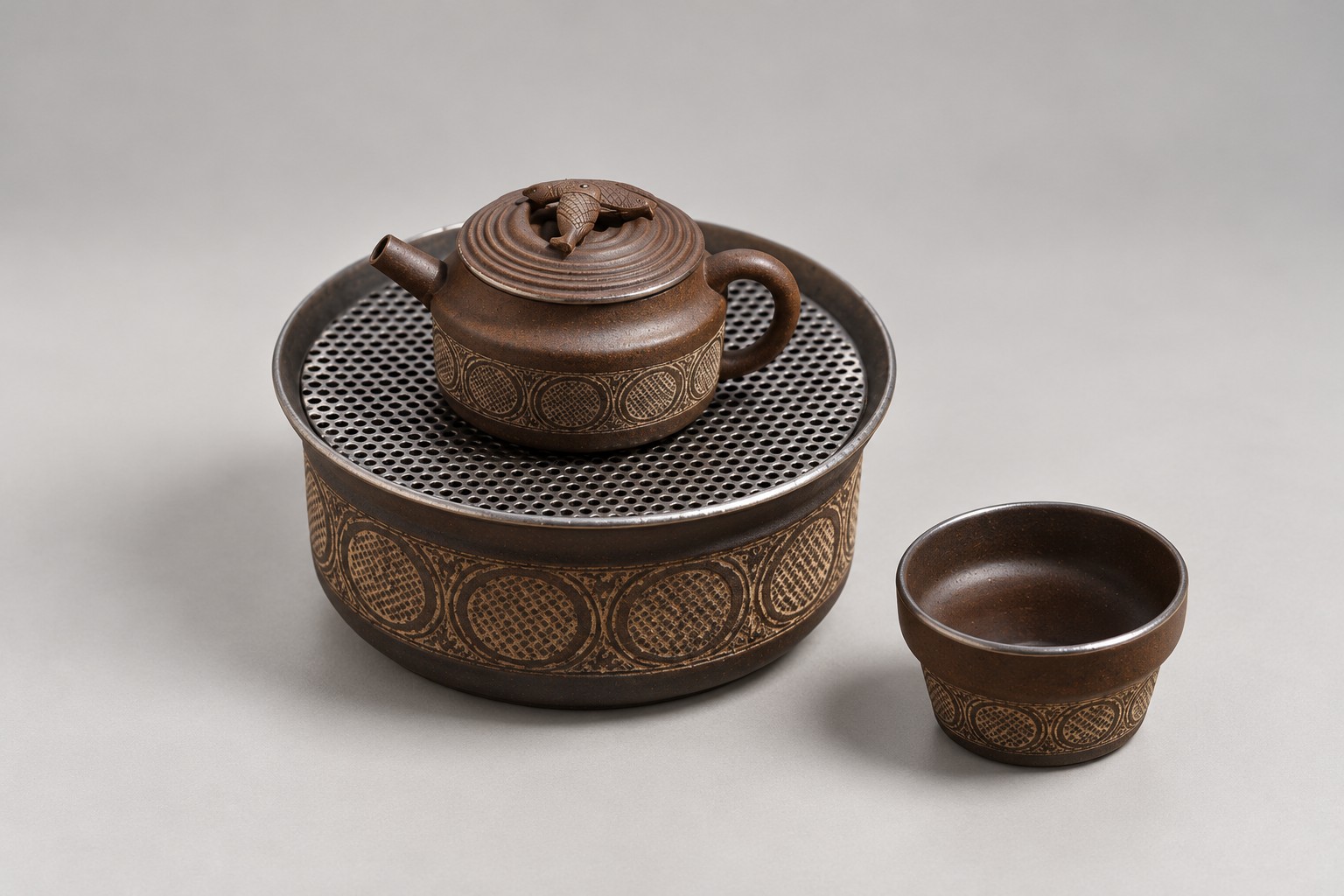
Drifting Fish (XT05) links a fish-shaped lid knob with medallion motifs on the pot and matching pieces. It offers a different starting point: a group with a shared decorative theme. Ask which parts are included in the order. Then check whether the pot serves the chosen cups in one round.
Compare the pieces before you choose
Use this comparison to narrow your shortlist. The last column gives you a few useful questions to bring to a sample discussion.
| Piece | Documented in the catalogue | Still to confirm |
|---|---|---|
| Quiet Lotus (XT10) | Straight-sided body, angled spout and upper petal-like details. | Clay documentation, capacity method, grip when filled and pouring. |
| Drifting Fish (XT05) | Fish-shaped finial and related medallion motifs on the pot and accompanying pieces. | Which pieces an order includes and the serving relationship with chosen cups. |
| Botanical Quartet (T02) | Four plant motifs; H 6 × Ø 4.5 cm; group and hand-held photographs. | Measured capacity, material documentation and comfort in use. |
Choosing capacity around cups and people
There is no one pot size that suits every tea setting. Start with the cups and the number of people you want to serve.
Stated capacity is the volume declared by the supplier under a specified measurement method. Ask which fill line and method were used. Serving volume is the amount of tea actually poured into the cups during one round. It should not be assumed to equal the stated capacity.
Will you make tea for one person or a small group? Are the cups small tasting cups or larger daily mugs? Will you brew in short rounds or serve more tea at once?
Check the pot and cups as a set. A group that looks right on a shelf still needs to work when you pour. Record the amount served, rather than judging by shape alone.
Ask how the stated capacity was measured. A fill-to-rim figure and the amount used for brewing are different things. Labels such as “small” and “large” are not enough to compare two pots.
For example, two cups filled with 50 mL each need 2 × 50 = 100 mL of tea per round. This is a serving sum, not advice to buy a 100 mL pot. Leaves take up space, and the fill level affects how much tea you can pour. Check the pot-and-cup pair with a sample.
Pairing cups: what real photographs can show
Botanical Quartet (T02) is a group of four tall cups with plum, orchid, bamboo and chrysanthemum motifs. Our catalogue lists each cup as H 6 × Ø 4.5 cm. The real photos below show the group and one cup held in a hand. They illustrate cup choice and scale, not the clay used in zisha.
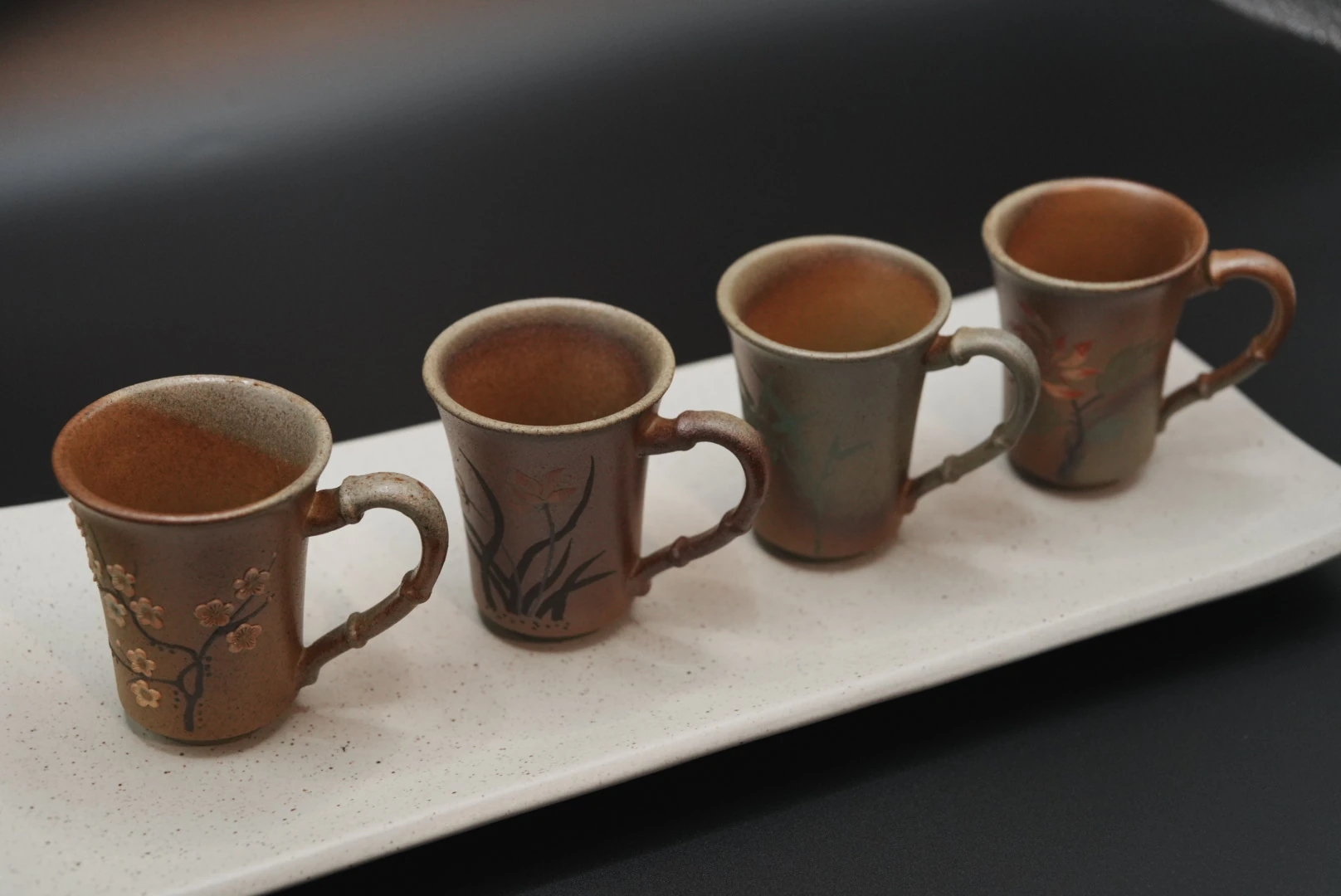
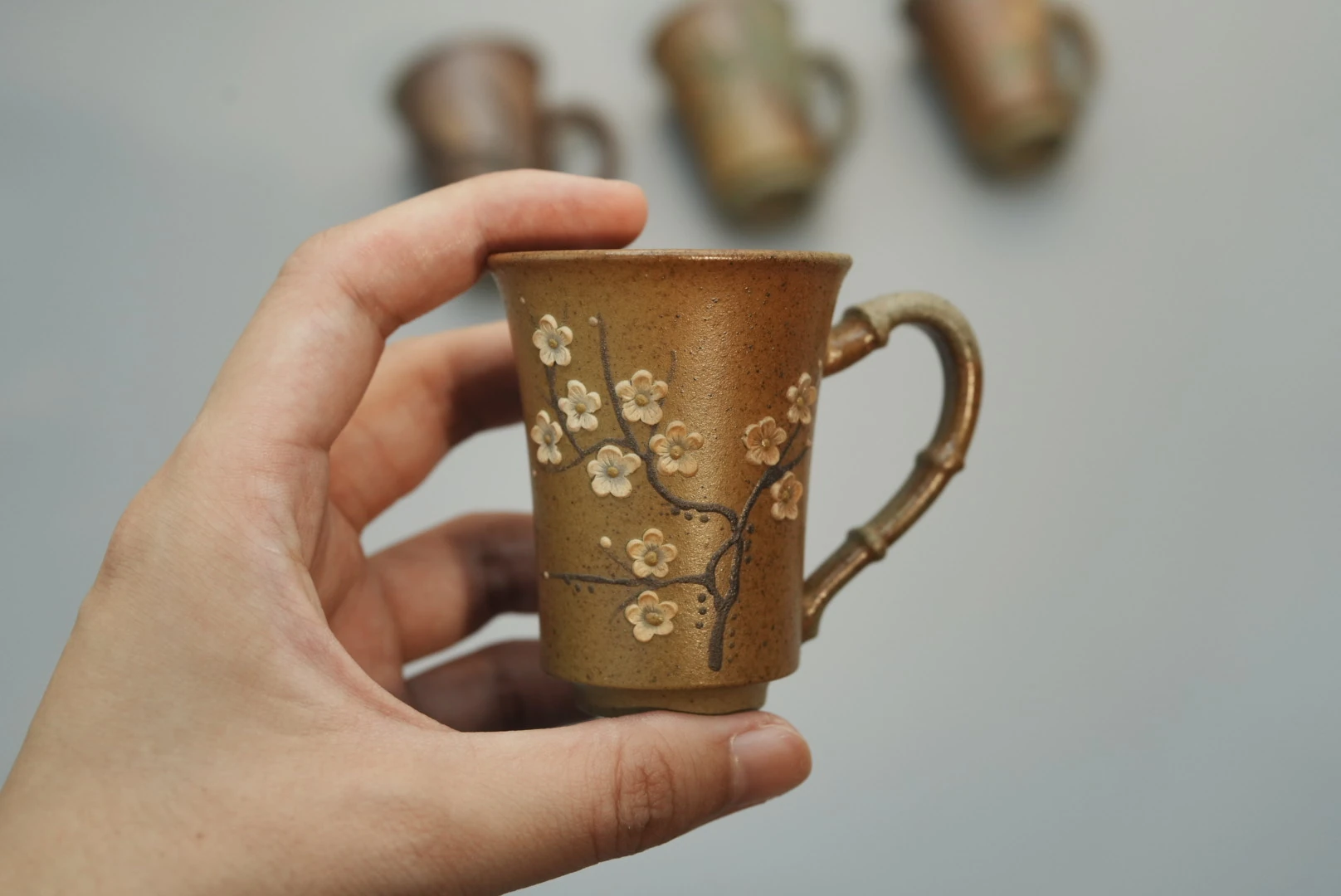
Use the photos to compare the space by the handle, the rim and the overall shape. Use a sample to check comfort, balance and serving needs. If the record has no capacity, do not derive it from the outer height and width. Nor does a photo prove that a cup is paired with a given pot.
A selection framework for different settings
Start with the place and people you are choosing for. A piece for daily tea, a shop shelf and a gift each has a different job to do.
| Setting | Compare first | Check with the sample |
|---|---|---|
| Solo and everyday tea | Grip, storage and serving needs | Pair the pot with the intended cup; record the fill level and serving result. |
| Shared tea and tea spaces | People, cups and repeated pouring | Simulate serving the intended group; assess grip and pouring. |
| Retail display and sets | Style, dimensions and included pieces | Check the item list, proportions and pot-to-cup capacity relationship. |
| Gifting | Care information, packaging and delivery | Confirm a packaging sample, instructions and the available arrangements. |
A small, clear group of pieces can be a useful place to start. Give each one a role in the range.
Before you choose, ask for these details:
- The stated material and making method.
- Capacity, dimensions and what is included.
- Any documented information about the maker.
- Product-specific care instructions.
- Packaging and supply arrangements.
Check any detail your customers will rely on. A clay name or maker’s seal is more useful when it comes with records. A photo of a seal is not proof on its own.
Before selecting, keep a checkable record
Use the same short record for each piece: product code, stated material, size, capacity method, parts in the set and notes from the sample. Leave a blank marked “to confirm” when a detail is missing. Do not fill it in from a photo.
Separate your observations from the supplier’s specifications and your sample experience. For a shop or tea space, this gives you a practical reference for choosing complementary pieces, explaining their differences and returning to the same selection when planning a future order.
Common questions before you choose
Is stated pot capacity the same as the tea it serves?
Not always. Ask how the capacity was measured. Then check a round using the intended fill level and tea. The serving sum above works out demand; it does not measure a product.
Can cup height and width tell me its capacity?
No. Outer size does not tell you the wall thickness, inner shape or fill line. Ask for a measured capacity and how it was checked.
What should I record when a sample arrives?
Check the product code, included parts and supplier records first. Then follow the use instructions and note grip, pouring and cup fit. Keep photo notes separate from notes made in use.
About this guide
By AM Clay Studio, based in Yixing, China. The museum records below explain the historic material and forms. Product details come from our XT10, XT05 and T02 catalogue entries; the cup photographs are from our own image archive.
Our research method compares the museum records with the XT10, XT05 and T02 catalogue descriptions. Historical material, visible design and practical use are considered separately, so you can distinguish what a photograph shows from what a sample can help you decide.
Learn more about us, or contact us for product advice or editorial corrections.
References
Planning a bulk order? Use our wholesale teaware enquiry guide to prepare your requirements.