
Choosing Ceramics for Retail, Hospitality and Gifting
Find a direction for your store, space or gift project, with ceramic vases and teaware from the AM collection.
Choosing ceramics for retail, hospitality and gifting starts with the role you want each piece to play. A vase can bring colour to a quiet shelf. A patterned teapot can become the focus of a small display. A pair of cups can offer a gift with a clear everyday use.
Whether you are buying for a shop, hotel, restaurant, tea space or gift project, start with the setting and the people who will use it. This guide brings together pieces from our ceramic vase collection and teaware selection to help you find a direction worth exploring.
Key takeaways
- Choose the purpose first: resale, display, tea service or gifting.
- Compare shape, colour and scale together, using the dimensions of the intended space.
- Build a small shortlist of product codes rather than choosing from photographs alone.
- Share your quantities, destination and timing so the selection can become a specific enquiry.
Start with the role of the piece
Hospitality refers to hotels, restaurants and other spaces that welcome guests. These settings can share an interest in ceramics with retailers and gift buyers, but the same piece may serve a different purpose in each.
A shop buyer might want a range that looks coherent on a shelf. An interior designer may be looking for one form to complement stone, wood or textiles. A gift buyer may care most about the recipient, the number of sets and how they will be presented.
| Your setting | A useful starting point | Bring to the discussion |
|---|---|---|
| Retail and distribution | A clear style with a mix of individual pieces and groups. | Intended customers, preferred codes and a quantity per item. |
| Hotels and commercial interiors | Vases or objects chosen for specific shelves, tables or consoles. | Placement photos, available dimensions and quantity by location. |
| Tea and guest reception | Pots and cups chosen around serving habits. | People served, cup preferences and sample questions. |
| Corporate and project gifting | A piece or group with a clear use and visual character. | Recipients, set contents, packing needs and delivery timing. |
For example, a hotel shop and a reception desk can both feature a vase. The shop needs a retail range; the desk needs a piece for a measured space. Tell us which task you are working on.
Choose vases around scale, colour and placement
Measure the surface where a vase will sit, as well as the space above and around it. Think about the view from the doorway and from nearby seating. A close-up product image shows one view. Compare the piece with the lamp, menu stand or books that will sit beside it.
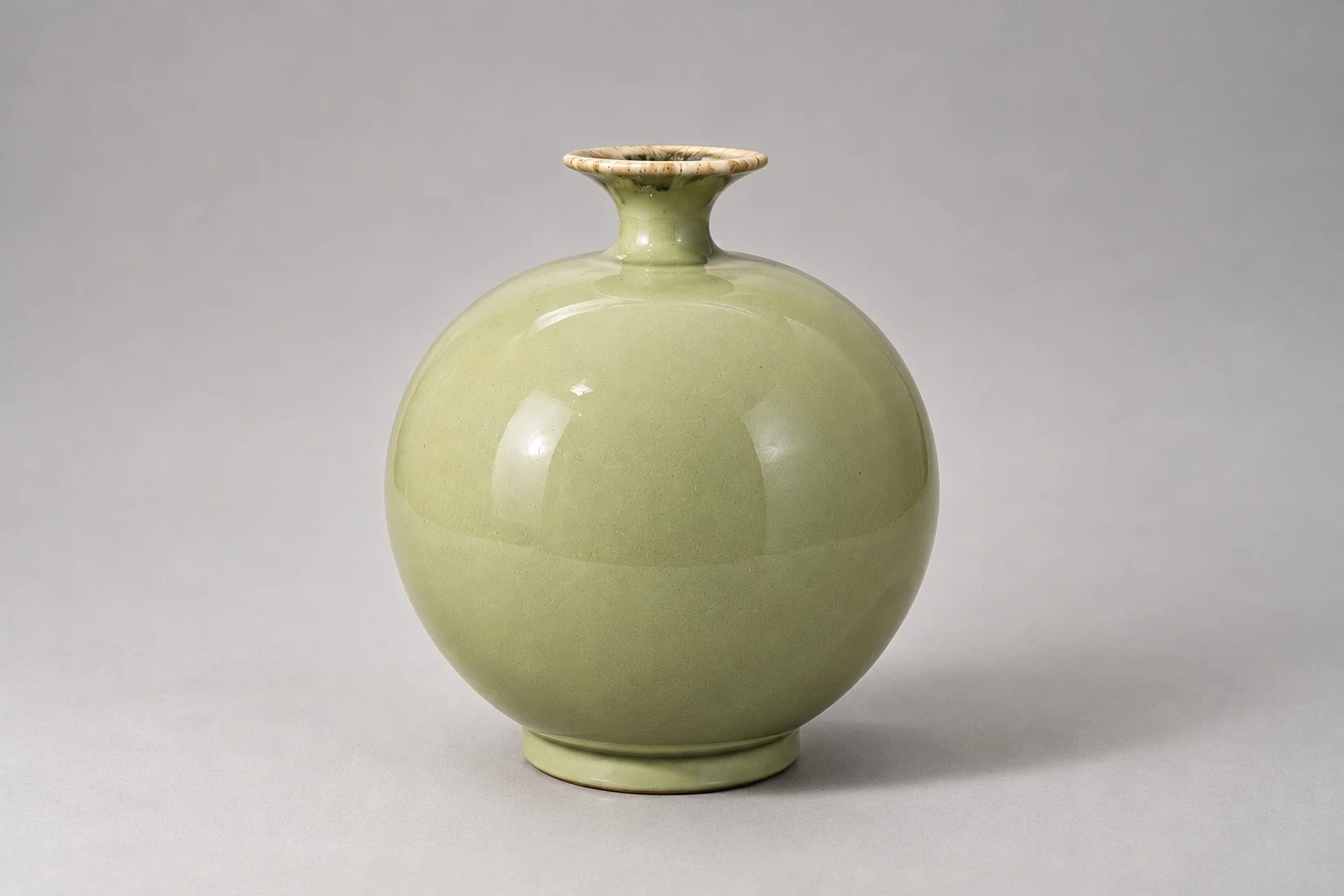
A quiet shape: Spring Waters · V03
Spring Waters (V03) has a full, rounded body and soft celadon glaze. Its simple outline is a starting point for a restrained display. The catalogue lists H 18 × Ø 16 cm; compare those dimensions with your shelf or table before deciding where it belongs.
A lower profile: Autumn Glow · V07
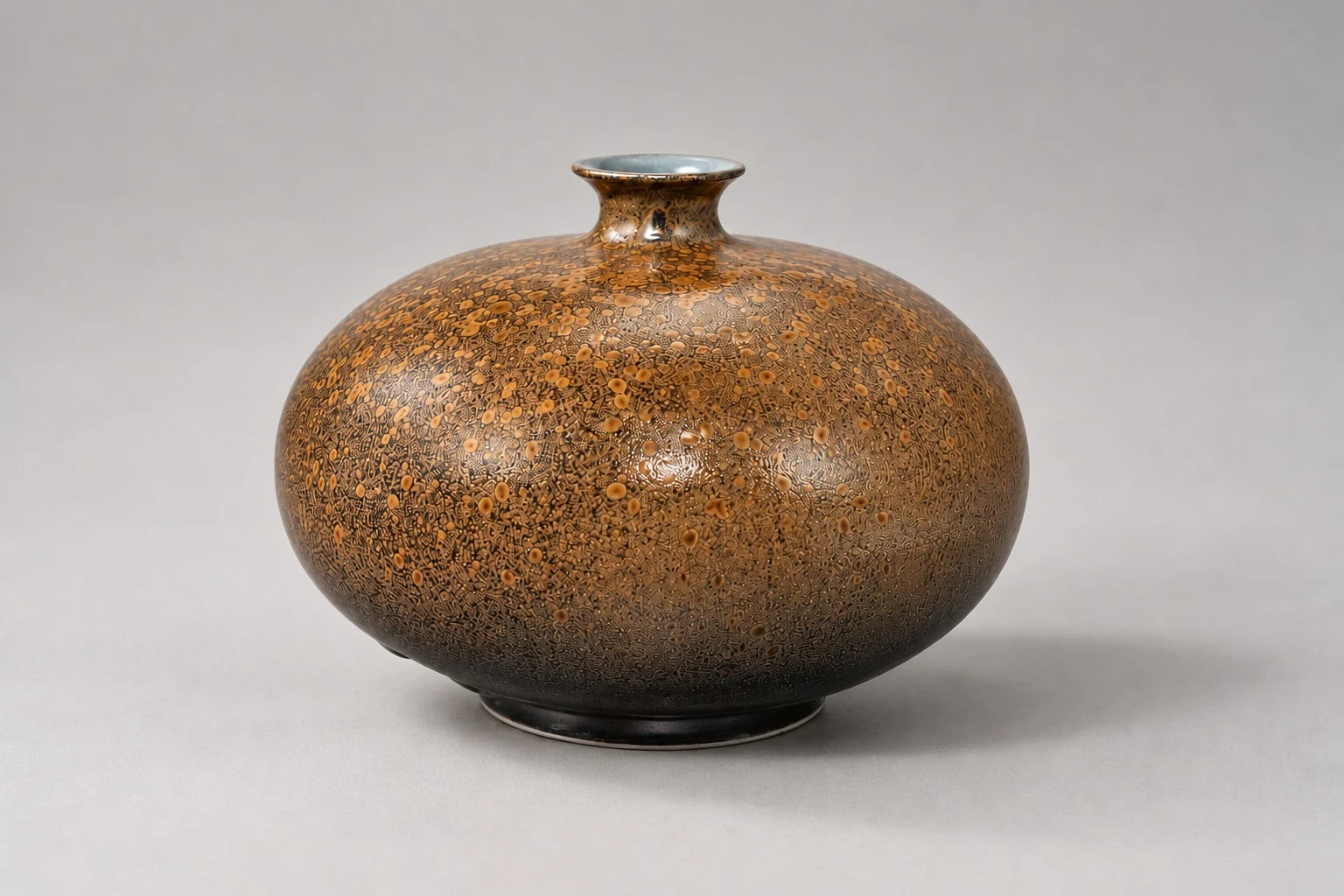
Autumn Glow (V07) combines a low rounded body, narrow neck and brown-and-gold speckles. The catalogue lists H 13 × Ø 20 cm. Compared with V03, it is lower but wider across the body. Neither is a large floor vase; their scale is better assessed against the actual tabletop or shelf.
Try a paper outline of the listed footprint in the intended position. Leave room for neighbouring objects and daily activity. If you plan to add fresh flowers, include that in your enquiry so water-holding suitability and care can be confirmed for the chosen piece.
Choose a custom glaze colour for your vases
AM Clay Studio offers custom glaze colours for vases. If you are choosing ceramics for a store, interior or gift project, this gives you another way to connect a vase with your wider colour palette.
Start with the vase code and the colours you have in mind. Share a reference image, colour swatch or mood board, together with the quantity and intended use. A warm neutral, a soft green or a stronger accent can each suggest a different direction; tell us which qualities matter most to you.
We will discuss glaze options, sample arrangements and pricing for your brief. Reviewing a glaze sample can help you decide on the tone and surface character before the order details are agreed.
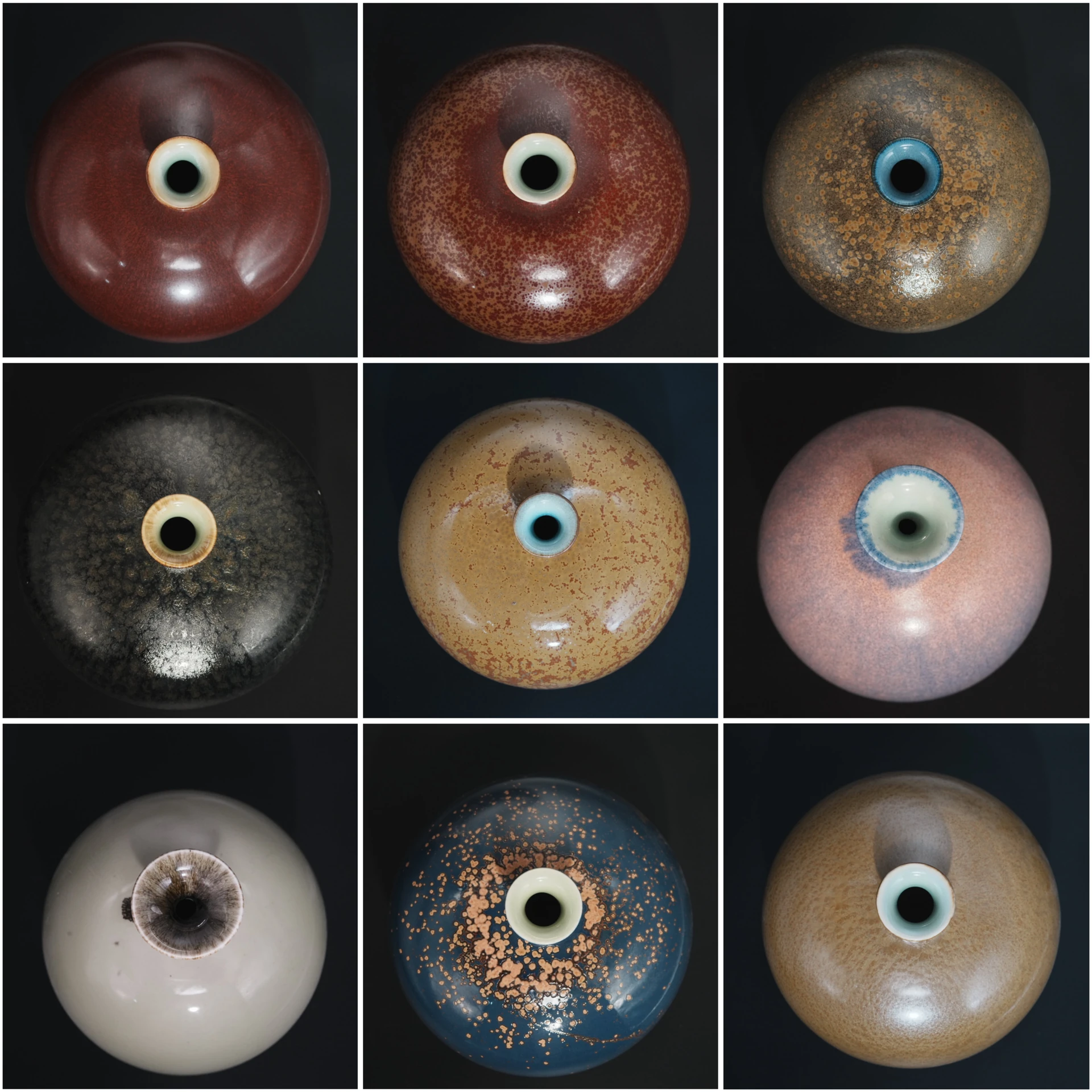
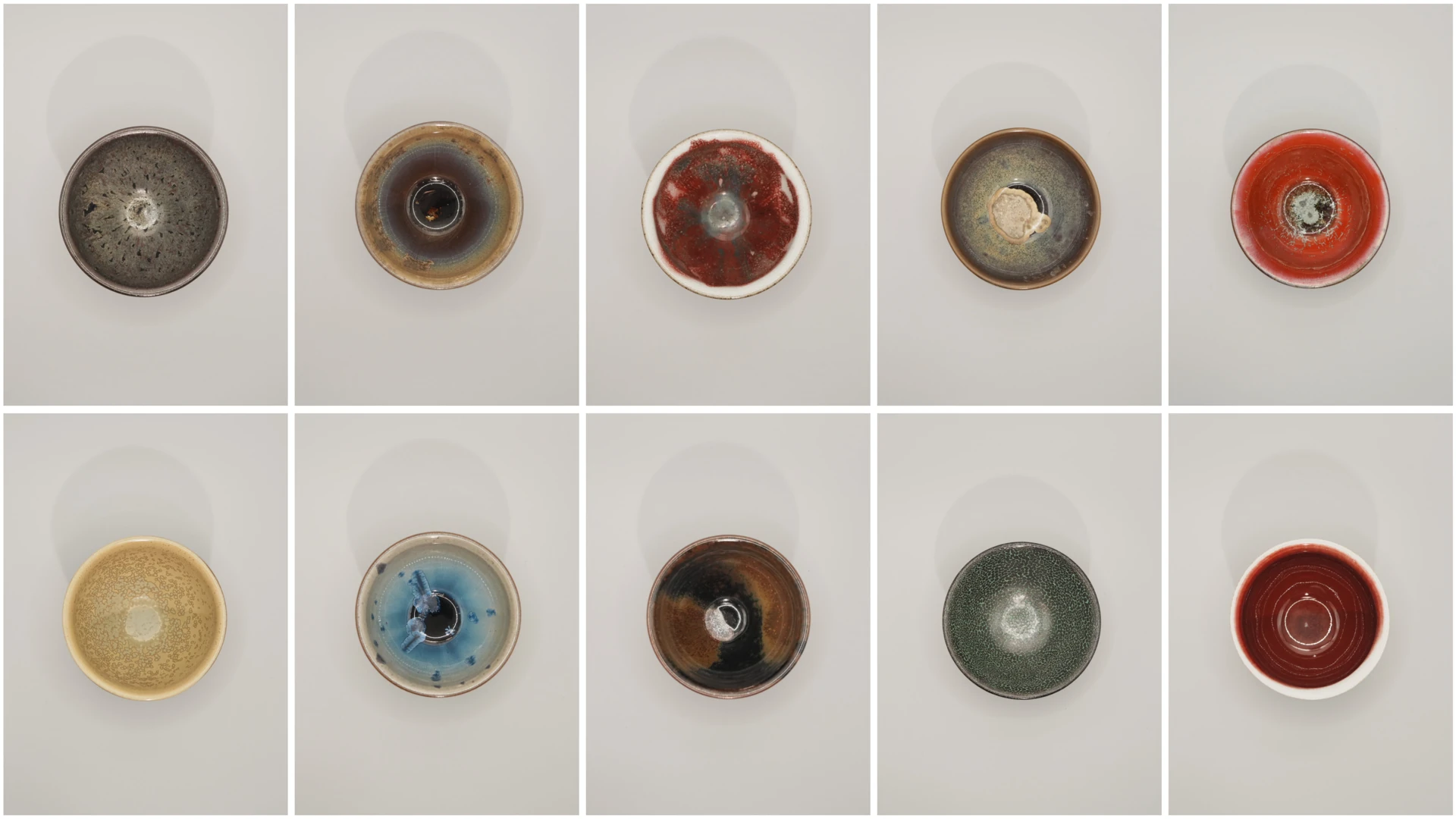
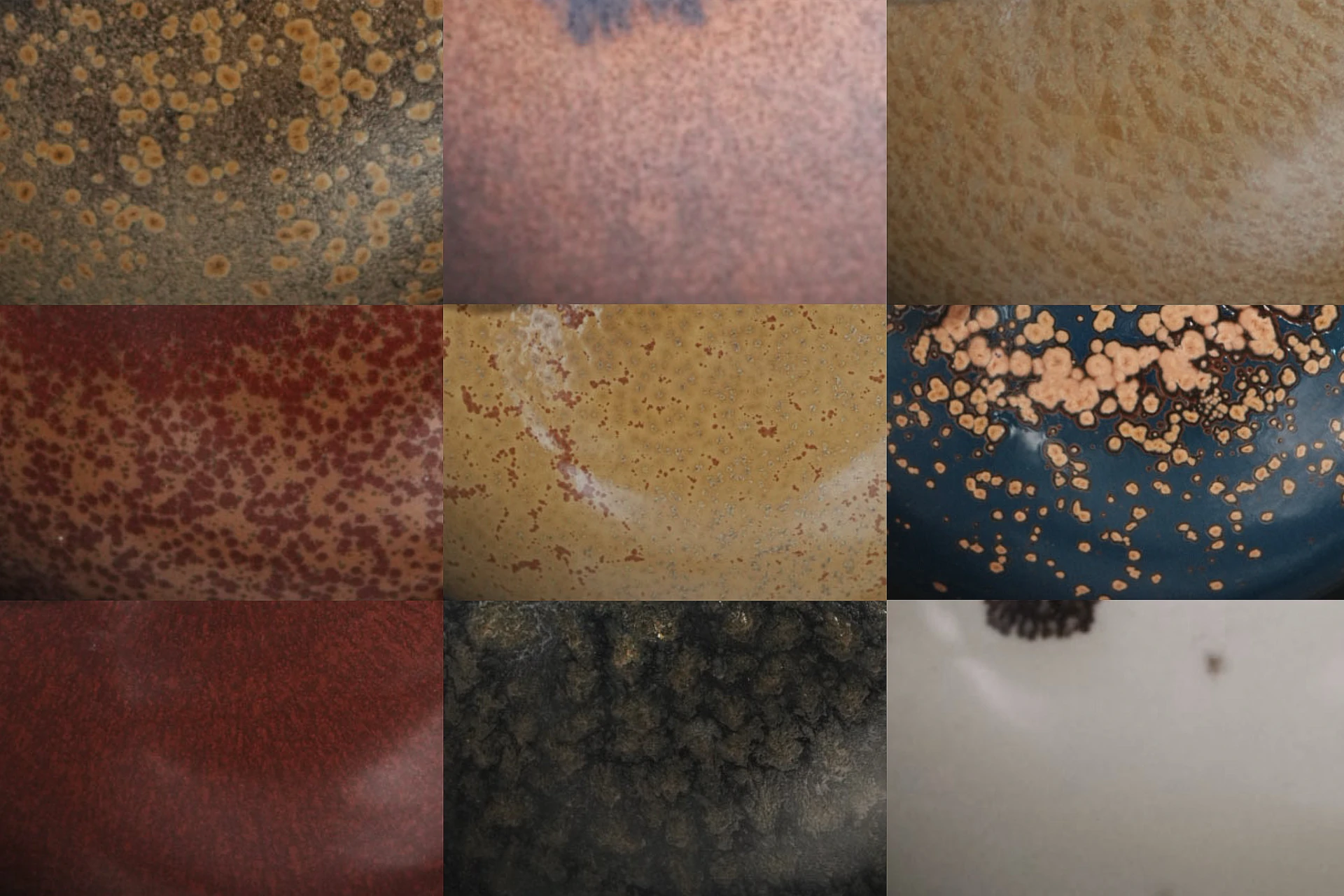
Use these photographs to show us the tones and textures you like. We’ll discuss how to develop the direction for your chosen vase and review the agreed sample.
Use teaware to give a collection character
Teaware can sit within a retail range, a guest reception setting or a gift selection. Start with the mood you want, then check the practical details of the pot or cups. Visual character and everyday handling both deserve a place in the decision.
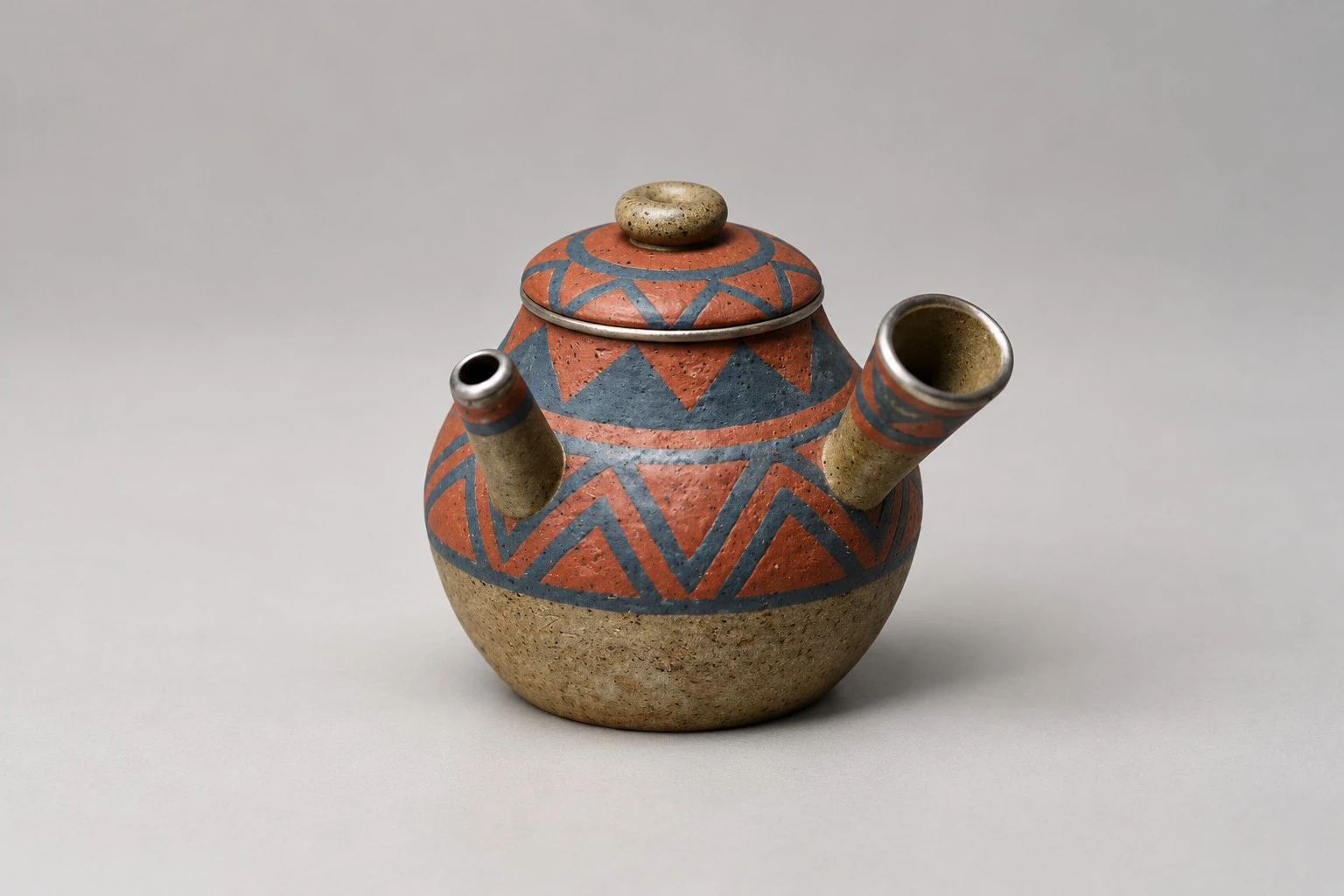
Rhythm in Color (XT04) wraps geometric patterns and contrasting colours around a teapot. It is an option to consider when the collection needs a stronger visual focus. For a simple display, compare it with quieter surrounding objects rather than repeating every colour across the whole shelf.
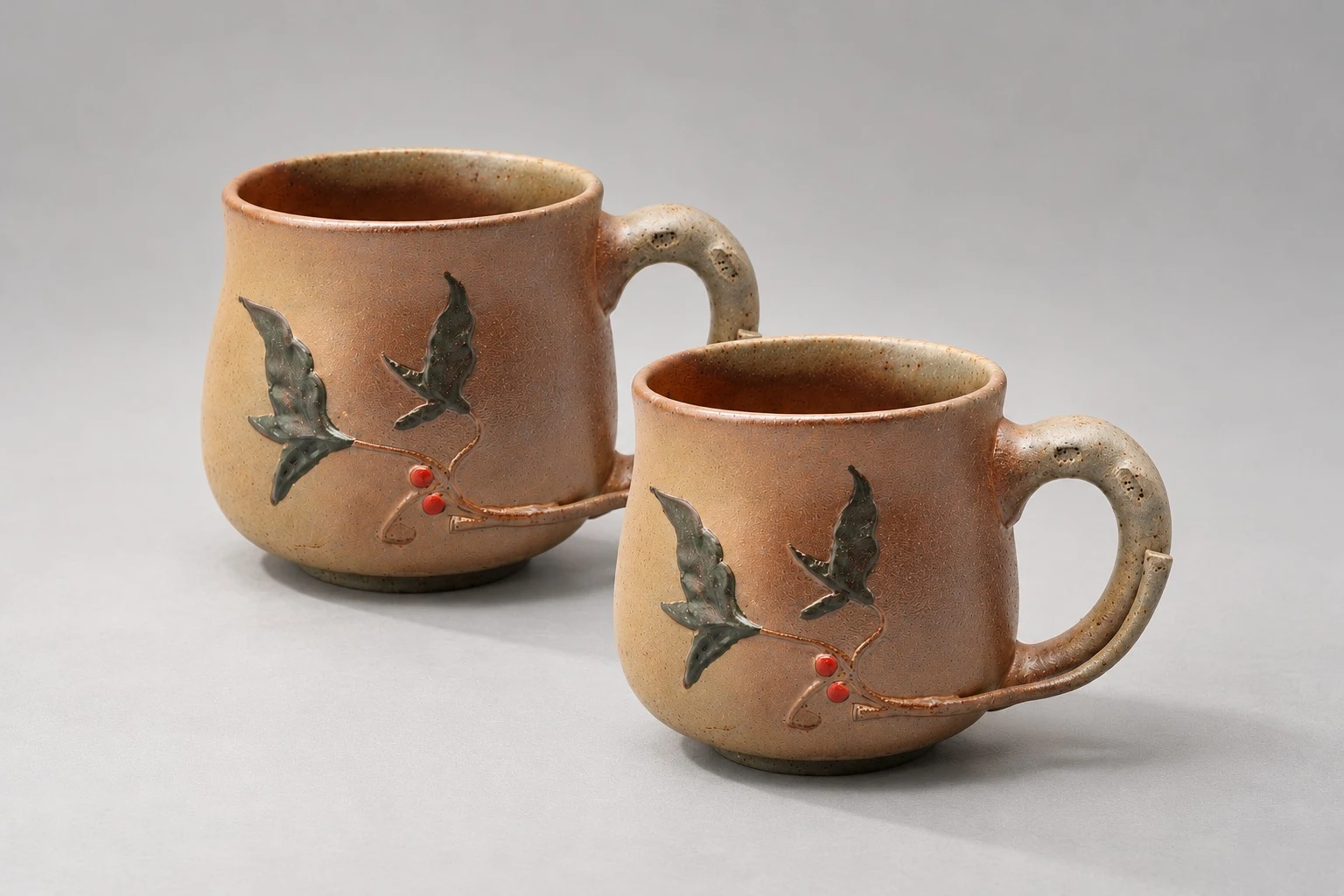
Among the Branches (T04) offers a different direction: two rounded cups with leaf-and-fruit details. The shared motif gives you a way to discuss a paired gift or a small retail group. Ask how the quoted set is defined and which pieces are included.
For tea service, consider the number of people and the cups they will use. Our pot and cup capacity guide explains that relationship. A sample can then help you assess grip, balance and pouring in your own setting.
Build a shortlist with a clear visual thread
A product shortlist is a small group of pieces you want to compare. They do not have to match in every detail. Choose one thread to connect it: a soft colour, a rounded form, a botanical motif or a contrast between quiet and expressive pieces. Then give each object a role.
For instance, a shop could explore V03 for a restrained vase direction and T04 for a botanical cup group, displaying them as separate choices within one range. This is a visual idea to discuss, rather than a pre-packed set. Your customer mix and the space available should decide how far to take it.
| Piece | Selection cue | Useful next question |
|---|---|---|
| Spring Waters · V03 | Rounded shape, soft celadon; listed H 18 × Ø 16 cm. | How does its scale sit with the planned display? |
| Autumn Glow · V07 | Low, broad body with warm speckles; listed H 13 × Ø 20 cm. | Is there enough surface width and clearance? |
| Rhythm in Color · XT04 | Geometric pattern and contrasting colours on a teapot. | Which cup style and serving needs should guide a sample? |
| Among the Branches · T04 | A pair of rounded cups with leaf-and-fruit decoration. | What does each quoted set include, and how should it be packed? |
Keep the product codes beside your notes. You can send a shortlist with alternatives rather than choosing one final answer before we speak.
Check use, handling and gift presentation
For an interior project, share how the area is used and who will move or clean the pieces. In guest areas, think about access, table activity and the space around each object. For vases, check the base and intended contents; for teaware, ask for the care and use information relevant to serving.
The Canadian Conservation Institute’s ceramic handling guidance advises supporting an object from below and stabilising it with the other hand. Although written for collections, it is a useful reminder to consider how an object will be handled, not just how it looks.
For gifting, describe the recipient, the number of gifts and what each should contain. Discuss individual boxes, a grouped presentation or other packing needs. Canada Post’s packing advice highlights cushioning and suitable packing: a presentation box and a transport pack have different jobs. Confirm both as part of the proposed arrangement.
If you need several pieces to sit together, ask about the expected range of appearance and review a sample where appropriate. Share the finish you like and any details that need to remain consistent.
Start a project conversation with a style you like
Keep the name or code of a favourite piece and send one enquiry. Tell us the setting or colour direction if you know it; we can recommend more products and discuss the selection together. A rough overall quantity or target date is helpful when available, and can be discussed later.
For custom finishes, choose from the ceramic blank forms we offer and discuss the glaze colour. We complete the glazing and firing, then ship the finished ceramics. Available forms, samples, prices, quantities and delivery arrangements are confirmed for your request.
For a tea-focused order, our wholesale teaware enquiry guide shows how to start with a short message. The same enquiry can include vases and teaware; there is no need to fill in a separate form for every design.
When a quote is ready, review the agreed products, quantities, prices and delivery details. The International Trade Administration’s quotation guidance lists those fields, along with payment terms and quote validity, as useful details to check.
Questions buyers often bring to the selection
Can one enquiry include vases and teaware?
Yes. List the codes and quantities separately, and explain whether they are for resale, a space or gifts. We can then discuss the proposed mix and its supply details.
Can I ask for help before choosing final products?
Yes. Share the setting, the style you like and the quantity range. A few reference images or collection favourites are enough to begin a conversation.
Can these vases hold fresh flowers?
Please tell us you need water use so it can be confirmed for the chosen product. The listed dimensions describe the outside size; they do not establish water-holding performance.
Can I customise the glaze colour of a vase?
Yes. Our vase glaze colours can be customised. Share the vase code, your colour references and the quantity you have in mind so we can discuss the glaze direction, samples and pricing.
Find a direction for your collection or project
Tell us what you are buying for, which pieces caught your eye and the quantities you have in mind. We’ll discuss the selection and the next steps with you.
Discuss your ceramic requirementsAbout this guide
By AM Clay Studio, a ceramics brand based in Yixing, China. The product comparisons use the V03, V07, XT04 and T04 catalogue descriptions and images. Dimensions are catalogue values; suggested groupings are starting points for your own selection.
Further references: CCI ceramic handling, Canada Post packing guidance and ITA quotation details. Learn more about us, or contact us for product advice or editorial corrections.